
Understanding the U.S. Southern Command Deployment: A Closer Look at the Strategic Move
The recent decision by the U.S. military to send an aircraft carrier toward South America has captured national attention and sparked intense debate among policy experts, legal observers, and the general public. This opinion editorial aims to take a closer look at the situation, offering a balanced perspective on the deployment, its underlying motives, and the potential ramifications that may unfold in the coming months.
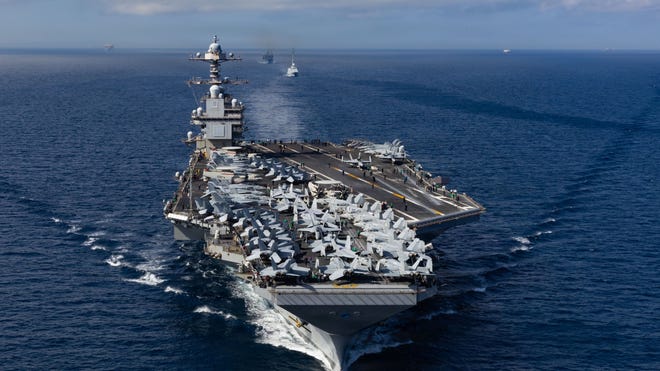
At the core of this move lies the order from Defense Secretary Pete Hegseth to deploy the USS Gerald R. Ford along with its strike group to the U.S. Southern Command region. The rationale behind this decision is to strengthen the nation’s capacity to detect, monitor, and disrupt illicit activities that might threaten the country’s safety and prosperity. Yet, for many observers, this action also represents a significant escalation—a deliberate show of military muscle intended to send a powerful message to states and actors in the region.
When one takes a closer look at this deployment, one is confronted with several tricky parts. For instance, while the goal is to counter drug trafficking and other dangerous elements, the overall strategy introduces tangled issues related to regional stability, international diplomacy, and the potential need for a legal framework that legitimizes such actions. The fact that the USS Gerald R. Ford strike group today is spread across several key theaters—from the Mediterranean to the Arabian and Red Seas—underscores the complexity of U.S. defense priorities.
Beyond just a simple repositioning of naval assets, this latest maneuver grows even more significant when viewed as part of a broader U.S. military buildup in the Caribbean Sea and waters off Venezuela. With more than 6,000 sailors and Marines already present on eight warships in the region, the prospect of instantly adding nearly 4,500 more personnel along with nine squadrons of aircraft injects an element that many consider to be an overwhelming escalation in military resources.
Supporters of this strategy argue that such actions are necessary to keep illicit networks—from drug trafficking to even potential terrorist activities—in check. Critics, however, warn that the rapid escalation, coupled with ambiguous legal authority, could plunge the region into uncharted waters, leaving both U.S. and regional leaders struggling to steer through the maze of diplomatic and military consequences.
Trump Administration’s Tactics Against Drug Trafficking: Analyzing a New War Paradigm
The current administration’s tactics against drug trafficking have generated controversy and debate over the use of military force in operations that, historically, might have been handled by law enforcement agencies. This new strategy, which positions narco-traffickers in the same league as terrorists, has led to a series of targeted strikes that have escalated quickly in recent weeks.
In one of the latest operations, a suspected drug-running boat was struck—an action that resulted in the loss of six lives and brought the total death toll for these recent missions to at least 43 people. Using language reminiscent of the post-9/11 war on terror, Defense Secretary Hegseth declared that U.S. forces will map their adversaries’ networks, track those involved, and eliminate them without hesitation—day or night. The rhetoric used is designed to be both intimidating and clear: illicit actors in the hemisphere face a relentless pursuit, much as extremist groups once did.
This direct comparison between the drug war and the war on terror brings with it several tricky parts. The approach is loaded with issues related to legal jurisdiction, the potential for unintended consequences, and the possibility of escalation beyond initial targets. For example, juxtaposing drug cartels with groups like Al-Qaeda hints at a long-term commitment to a campaign that could provoke resentment and even prompt retaliatory measures across the region.
Many critics argue that the reference to drug cartels as “unlawful combatants” blurs the line between criminal justice and armed military operations. Without a clear legal mandate or Congressional oversight, such actions may risk overstepping the bounds of established U.S. law. Equally, there is concern about whether these measures could potentially serve as justification for even greater military involvement, escalating from targeted strikes to ground operations that might permanently alter the balance of power in a region already brimming with complicated pieces and hidden complexities.
As more frequent military strikes are reported—from operations in the eastern Pacific to activities closer to Venezuela—the strategic objective appears to be evolving. The focus on groups such as the Tren de Aragua, which officials have accused of being a central figure in the violence and drug dealing plaguing parts of Venezuela, indicates that the U.S. is willing to expand its definition of national security concerns. While proponents see this as an essential move to protect U.S. citizens, others worry that this strategy might inadvertently lead to an endless cycle of retribution and heightened tensions.
Regional Repercussions: The Impact on South America and Caribbean Stability
The ripple effects of increasing U.S. military presence in the region are not confined to Washington, D.C. The deployment of naval assets to South America and the Caribbean has prompted a range of reactions among neighboring countries and within international bodies, where many now question the long-term implications for regional stability.
Countries in South America, including key players like Venezuela and Colombia, are watching these developments with mixed feelings. On one hand, the enhanced military presence might offer a sense of security in combating drug trafficking and economic destabilization; on the other hand, the use of military power as a tool of diplomacy may be seen as overreaching and could trigger diplomatic backlash.
Regional leaders are faced with several tangled issues. For nations with sensitive political climates, the entrance of U.S. military hardware can be both promising and concerning. For instance, President Nicolás Maduro of Venezuela has accused the U.S. of orchestrating these maneuvers in a bid to force his departure from power—an assertion that, regardless of its factual basis, complicates an already tense political landscape.
Moreover, the deployment comes at a time when natural factors, such as Tropical Storm Melissa in the central Caribbean, introduce an additional unpredictable element. With forecasts predicting that the storm may intensify into a formidable hurricane, the simultaneous presence of an unprecedented military buildup and severe weather conditions creates a scenario laden with unpredictable twists and turns.
To help organize these concerns, consider the following list of key regional challenges:
- Increased military activity viewed as a direct challenge to national sovereignty.
- The potential for unintended casualties in operations across densely populated waters.
- Diplomatic tensions arising from perceived U.S. interference in domestic political affairs.
- Complications introduced by extreme weather conditions in the Caribbean.
- The challenge of balancing economic, security, and diplomatic interests.
These issues collectively contribute to a climate where the stability of South America and the Caribbean is more on edge than it has been in recent times. The U.S. security strategy, when viewed through the lens of regional interests and international law, must therefore contend with a series of challenging, and sometimes intimidating, obstacles that require careful, deliberate handling.
Legal and Ethical Considerations: Military Action Without Congressional Approval
One of the nagging points of concern in this series of operations is the question of legal legitimacy. Many lawmakers from both major political parties have voiced worries that these military actions are being carried out without the necessary authorization from Congress. In the absence of a clear legal mandate, there is a risk that unchecked executive power might pave the way for future operations that could expand into even more significant military conflicts.
This issue is filled with several complicated pieces. On the one hand, proponents of using the military as an instrument of foreign policy argue that a swift, decisive response is often necessary when lives and national security are at stake. On the other hand, critics observe that bypassing congressional oversight undermines the system of checks and balances that is a cornerstone of American democracy.
These legal and ethical questions invite us to poke around some of the hidden complexities that exist when a nation decides to rely heavily on its military capacity rather than conventional law enforcement pathways. Without a thorough and transparent debate in the halls of Congress, it is difficult to ascertain whether these actions are truly in line with the U.S. Constitution or whether they might set a dangerous precedent for future administrations.
A summary of the primary legal concerns includes:
| Issue | Key Concern |
|---|---|
| Congressional Authorization | The use of military force without explicit approval may erode constitutional safeguards. |
| Executive Overreach | Unilateral decisions by the administration may bypass traditional debates on national policy. |
| International Law | Aggressive military actions could potentially violate treaties or international norms. |
| Humanitarian Impact | The risk of civilian casualties and unintentional consequences remains a persistent concern. |
When looking at these considerations, it becomes clear that a careful balance must be struck between the urgent need to counteract transnational criminal activities and the equally important need to maintain adherence to established legal processes. This is one of those cases where the decision-makers have to get into both the strategic and legal nitty-gritty, making sure that the corrective actions taken today do not unintentionally undermine the broader rule of law.
Military Buildup Versus Drug Interdiction: The Fine Line of U.S. Defense Strategy
The juxtaposition of a massive military buildup with a focus on drug interdiction raises several problematic issues and forces us to take a closer look at the strategic underpinnings of this offensive. The U.S. government frequently frames these operations as essential steps in the fight against narco-terrorism—a term that has caused significant debate due to its loaded nature and broad implications.
While there is no denying that drug trafficking does pose significant challenges to public safety and stability, the use of elite military hardware and operations to counter drug smugglers introduces several twisted and entangled issues. Foremost among them is the question of proportionality: are the resources being deployed really necessary to combat what has traditionally been seen as a law enforcement matter, or is this the beginning of a broader, more ambiguous military engagement in the Western Hemisphere?
The rapid escalation—from sporadic strikes to a surge in military operations targeting drug-running vessels—suggests a change in the way the U.S. is approaching the problem. The decision to use technology and firepower on a scale typically reserved for traditional state adversaries hints at a new paradigm of U.S. defense strategy—one marked by a willingness to cross conventional boundaries in the name of national security.
Critics argue that this shift is full of problems that extend beyond simple security concerns. They see it as an effort to use drugs as an excuse for a broader military presence, which could eventually lead to an entanglement in regional conflicts. A few of the difficult aspects include:
- Resource Allocation: Diverting significant military assets to drug interdiction might reduce readiness for other more conventional security challenges.
- Diplomatic Fallout: Neighboring countries may perceive these actions as a direct threat to their sovereignty, especially if U.S. forces are seen operating near or within their territories.
- Operational Risks: High-stakes military operations in busy maritime environments carry the risk of accidental engagements or escalatory missteps.
These bullet points only scratch the surface of the tangled issues embedded within this strategy. As the administration continues to emphasize rapid and aggressive military actions against drug traffickers, it may become increasingly difficult to differentiate between a legitimate fight against unlawful actors and an overextended military incursion into regions that have traditionally been managed through diplomatic and law enforcement channels.
The Messaging of Military Might: Impact on International Relations
Military deployments of this scale are seldom just about practical security measures; they also carry a potent symbolic message. By sending a massive strike group to South America, the Trump administration appears to be signaling that the U.S. is ready and willing to use force to maintain its influence in the region. This symbolic gesture is designed to impress, and in some cases, intimidate, nations that may otherwise drift away from U.S. strategic interests.
Experts suggest that this approach is part of a larger messaging strategy that uses military presence as a form of diplomatic leverage. In conversations with international observers, many have remarked that the actions being taken today are reminiscent of a past era when military might was used explicitly as a tool of foreign policy. However, in modern geopolitics, where ideas of sovereignty and international law are highly prized, such a message can also be interpreted as an act of aggression or overreach.
It is important to note that this military message is multifaceted. On one front, it reassures U.S. allies that the government is serious about countering transnational threats—which, in the eyes of many policymakers, is a key factor to maintaining regional stability. On another front, it sends a clear signal to adversaries that defiance of U.S. interests will not be tolerated.
For clarity, here are some of the key points that highlight how military messaging might impact international relations:
- Diplomatic Leverage: A show of force can help secure alliances with local partners while pressuring dissenting governments to consider aligning with U.S. objectives.
- Perceived Aggression: An overt military buildup risks alienating regional players who view these maneuvers as encroachments on their sovereignty.
- Balancing Acts: The need to maintain a strong stance against illicit activities while avoiding escalation into full-blown conflict creates a series of tricky parts for diplomatic strategists.
International relations are full of subtle details and slight differences in how events are interpreted, and the current situation is no exception. While some world leaders may welcome the bolstering of security measures, others may view it as a sign that the U.S. intends to use military might to impose its will on the region, potentially setting off countermeasures or realignments that could further complicate an already tense geopolitical landscape.
Looking Ahead: The Future of U.S. Military Engagement in the Region
Given the dramatic escalation in military force and rhetoric, many observers now wonder what the future holds for U.S. military engagement in South America and the Caribbean. The current trajectory suggests that we may be on the brink of a significant strategic shift—one that could reshape regional dynamics for years to come.
Though the primary stated goal is to combat drug trafficking and related illegal operations, the broader implications are much more loaded with issues. With an increasing focus on rapid military actions, some fear that future operations might expand beyond the initial scope to include additional conflicts or sustained military presence. Such a scenario would require not only careful planning but also a recalibration of legal oversight and diplomatic strategy.
Looking ahead, several possible developments warrant discussion:
- Expansion of Military Mandates: Should operations continue to intensify, there is a risk that the U.S. may expand its authority in regions where drug trafficking is only one of many challenges.
- Greater Congressional Scrutiny: As military actions ramp up, lawmakers are likely to push for clearer guidelines and more transparent oversight of such operations, which may lead to legislative reforms.
- Increased Diplomatic Engagement: Recognizing the sensitivity of the situation, U.S. and regional leaders might engage in more robust diplomatic dialogues to temper any potential overreach and address underlying grievances.
- Unintended Military Entanglements: The high operational tempo and deployment of advanced assets could inadvertently lead to scenarios where U.S. lives are directly at risk, sparking debates over whether the current strategy is worth the potential human cost.
The future course of U.S. military involvement in the region will largely depend on how effectively policymakers can manage these intimidating challenges. A tactical balance must be found—one that allows for effective countermeasures against illicit activities while ensuring that the operations remain within the confines of U.S. law and international norms.
One of the most important factors in shaping this future is the manner in which America communicates its intentions both at home and abroad. Transparency on the strategic objectives, clear reporting to Congress, and dialogue with allied nations are essential steps. Without these measures, the risk of further escalating conflicts and fostering resentment among local populations could turn what is now seen as a temporary show of strength into a long-term strategic misstep.
Concluding Thoughts: Striking a Balance in an Era of Rapid Military Change
In conclusion, the deployment of the USS Gerald R. Ford strike group to the waters off South America marks a significant milestone in U.S. military strategy—a move that is at once tactical, symbolic, and fraught with a series of tricky parts. On the one hand, it represents a bold claim against the networks of drug trafficking that have long plagued the hemisphere. On the other, it introduces a cascade of tangled issues that not only affect the region’s stability but also challenge the existing legal framework that governs U.S. military operations.
The strategy in play is both a reaction to immediate threats and an indication of a longer-term pivot in defense strategy—toward increasingly militant responses to problems that, until recently, were managed by law enforcement. By treating drug trafficking as akin to acts of terror, the current administration has paved the way for actions that raise serious questions about proportionality, accountability, and the proper scope of military power.
It is essential to recognize that the military buildup and aggressive tactics are not isolated phenomena. They are part of a broader messaging strategy intended to reposition the United States on the global stage, reminding allies and adversaries alike of the country’s readiness to protect its interests by any means necessary. However, this approach comes with heavy responsibilities. How the U.S. manages these responsibilities—ensuring that the use of force does not spiral into an endless cycle of escalation—is a matter of both immediate and long-term national interest.
Policymakers must find a way to balance robust security measures with the need to abide by legal standards and respect international norms. The challenges are undoubtedly intimidating—a blend of tactical puzzles and intricate legal dilemmas that require decision-makers to get into both the overt military details and the hidden procedural bits that govern how power is wielded on the international stage.
For citizens and international observers alike, these events offer a moment to reflect on the role that military power should play in addressing multifaceted problems such as drug trafficking. There is a fine line between a well-targeted, effective operation and one that morphs into an overly aggressive policy with unpredictable side effects. As the U.S. government moves forward, it will be crucial to keep this balance in mind, ensuring that the fight against illicit activities does not come at the expense of democratic processes and international stability.
In the end, the situation forces us to work through a series of critical decisions about what type of presence the United States wishes to project, both to its own people and to the world. The current military posture, with its advanced weaponry, rapid response tactics, and high-profile rhetoric, is a double-edged sword—capable of both deterring criminal networks and inadvertently escalating geopolitical tensions. The path ahead is riddled with tension and uncertain turns, but with careful scrutiny and a commitment to legal oversight, it is possible to both protect national interests and foster an environment in which diplomacy and cooperation can thrive.
Ultimately, the conversation should not be solely about the immediate show of military might or the dramatic headlines that capture our attention on any given day. Rather, it is about crafting a strategic vision that thoughtfully integrates military, legal, and diplomatic tools. Only by doing so can we manage the confusing bits and tangled issues that come with rapid military escalation in an era where the stakes are higher than ever before.
As debates continue in both public forums and legislative chambers, one thing remains clear: the decisions made today will have lasting effects on the geopolitical landscape of the Western Hemisphere. We must therefore approach these challenges with a measured, nuanced perspective—acknowledging the need for security while standing firm on the principles of law, transparency, and respect for regional sovereignty. In navigating these turbulent times, it will be the balance between decisive action and careful oversight that ultimately determines whether the U.S. can truly chart a course toward long-term stability and peace in the region.
This editorial invites readers to reflect, discuss, and engage in a dialogue on what military power means in today’s interconnected world—a conversation that is as critical as it is complex. The path forward will undoubtedly require that all stakeholders—government officials, lawmakers, and everyday citizens—work together to figure a path that respects the fine points of law and diplomacy while ensuring that national security remains a top priority.
In a climate where every military maneuver is scrutinized and every decision carries the potential for significant consequences, the challenge is not merely to react quickly—but to do so wisely. The future of U.S. military engagement in South America and the Caribbean depends on finding that delicate equilibrium between the imperative to combat criminal networks and the equally important task of safeguarding the rule of law, thus securing a peaceful and stable regional order for generations to come.
Originally Post From https://www.kawc.org/npr-news/2025-10-24/u-s-sends-aircraft-carrier-to-south-america-in-major-escalation-of-military-firepower
Read more about this topic at
Power projection
Rethinking Power Projection for the 21st Century