
Examining the Decision to Hold a Joint Trial in the Preston Lord Case
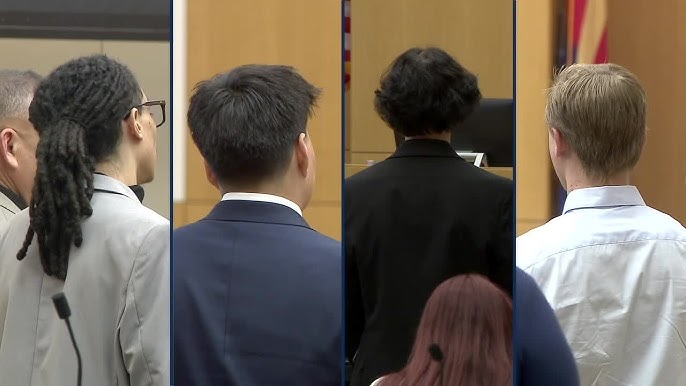
In a courtroom filled with tension and complicated twists, the debate over whether to hold a joint trial or separate trials for the remaining six suspects in the Preston Lord murder case has captured the attention of many legal observers. With the deadline for the severance motion now behind us, it is time to take a closer look at the arguments being made by both the state and defense, while also reviewing the broader implications of such a decision.
At the core of this discussion is the challenging question of how overlapping evidence and similar witness accounts can influence a judge’s ruling regarding separate trials. On one side, the defense attorneys argue that the little details in each suspect’s case could justify a split, especially if the defenses differ considerably among the accused. On the other side, the state maintains that the shared pieces of evidence and the intertwined nature of the events in question make the idea of multiple trials both overwhelming and almost impractical.
Understanding Overlapping Evidence in Group Crimes
When it comes to gruesome cases like the murder of Preston Lord, one of the most pressing questions is how evidence is presented and how the shared facts of the case bind the defendants together. The defense has cited issues with overlapping evidence as a rationale for separate trials. In their view, grouping several suspects together could unfairly jeopardize those whose involvement is minimal or who may even have had little to do with the core criminal activity. It is an important tactic used in group crimes, where the evidence sometimes paints a similar picture for everyone involved.
However, many legal experts believe that this overlapping evidence is precisely what makes the idea of a split trial questionable. For example, if multiple witnesses provide accounts that overlap significantly, calling the same individuals repeatedly in a divided trial would not only be repetitive, but it could also result in discrepancies between different jury deliberations. In this way, instead of clarifying the situation, separate trials might lead to a tangled web of conflicting outcomes.
Key Points on Overlapping Evidence
- Shared witness testimonies can blur the line between separate and joint culpability.
- The need to call the same expert witnesses across multiple trials can multiply costs and complicate logistics.
- Overlapping evidence risks inconsistent judgments, which could be detrimental to the integrity of the legal process.
In our analysis, it is essential to recognize that the state’s argument rests on the notion that the overlapping nature of the evidence would create nerve-racking complications if the trials were severed. The idea of subjecting each defendant to an individual trial, where every subtle detail is rehashed, can lead to excessive delays and potentially uneven verdicts.
Examining Group Liability and Accomplice Responsibility in Legal Contexts
A frequently cited legal doctrine in cases like these is that of accomplice liability. Under this principle, an individual who contributes in any way to the commission of a crime is held as accountable as if they had committed the act themselves. This legal concept plays a super important role when judges consider whether to grant a severance motion in cases involving multiple defendants.
Defense attorney David Black noted that in Arizona, if a person is involved in a crime alongside others—even if their role seems minor—the law tends to view them through the same lens as their more active counterparts. In jurisdictions where group liability is strongly enforced, splitting the trial might work against even those who argue that their involvement was trivial. This idea highlights the tricky parts of group liability, showing how the legal system tries to ensure a unified front in prosecuting those involved in a criminal conspiracy.
Understanding Accomplice Liability
- Accomplice liability holds all participants responsible if they aided and abetted the crime.
- This doctrine is meant to prevent individuals from evading guilt by distancing themselves from the main criminal act.
- The legal system often finds that when evidence overlaps, the distinctions between degrees of involvement become minimal.
While many critics claim that separating trials would allow for a more nuanced presentation of each defendant’s minor twist in the narrative, the overall structure of accomplice liability in group crimes makes it challenging to justify such differentiation. The fact remains that a defendant could be viewed as equally culpable as someone who is a clear instigator if the evidence presents them in the same light.
Addressing the Financial and Logistical Burdens of Separate Trials
Beyond the legal principles and evidentiary debates, the decision to grant a severance motion also carries with it a significant financial and logistical burden for the court system. Multiple separate trials mean duplicate preparations: the same witnesses would have to be managed and called upon, the same pieces of evidence examined repeatedly, and the administrative workload multiplied exponentially. In this light, the defense’s call for separate trials might, on the surface, seem like an effort for fairness—but it also invites a host of complicated pieces that must be considered.
Here is a simpler breakdown of some of the financial and logistical concerns:
| Issue | Joint Trial | Separate Trials |
|---|---|---|
| Witness Testimonies | Called once for all defendants | Called multiple times, increasing inconsistencies |
| Evidence Presentation | Streamlined and unified | Repeated and potentially fragmented |
| Financial Costs | Lower, consolidated investigation and court costs | Higher, due to redundancy in proceedings |
| Time Efficiency | Quicker resolution for the justice system | Potential delays and prolonged legal battles |
These factors contribute to why many in the legal community are skeptical about granting a severance motion when evidence is deeply intertwined. The risk of prolonged trials, increased costs, and the possibility of inconsistent verdicts all weigh heavily on the decision-making process of the judge.
Implications for Defendants in Group Crime Cases
For the accused in such cases, the prospect of separate trials holds mixed advantages and disadvantages. In instances where a defendant’s defense is notably different from that of their co-accused, having an individual trial may seem appealing. It might be seen as a chance to get away with minimal involvement while distancing themselves from more overtly culpable evidence against their counterparts.
However, in real-world group crimes—especially those as severe as a murder case—the evidence often does not permit this level of clean segmentation. There are several reasons for this:
- When evidence has overlapping elements, it is challenging for a judge or jury to completely extricate one defendant’s testimony from another’s.
- The repeated hearing of the same facts could lead to fatigue among jurors, ultimately influencing their ability to fairly assess each case on its own merits.
- The notion that one defendant might be less involved is frequently complicated by the legal reality that being present at or facilitating a criminal act calls for a shared responsibility under the law.
This duality illustrates one of the twisted issues inherent in group trials. The defense wants to highlight the slight differences—those small twists and subtle parts that might exonerate one suspect—and yet, the very nature of the case makes it difficult to separate fact from fiction without repeating the same narrative over and over again.
For the Victims’ Families: Balancing Justice and Delay
It is important not to overlook the impact of these legal decisions on the families of the victims. In cases as emotionally charged as the murder of Preston Lord, each delay in reaching a verdict means a prolonged period of uncertainty and pain for those seeking closure. While the defense might argue that separate trials offer a fairer chance for each individual to be heard, the reality for the victims’ families is that justice can become a much slower process.
The family of a victim may find themselves in a position where one trial concludes swiftly while another drags on due to the separation of evidence and testimonies. This asynchronous progression not only prolongs their suffering but also means that justice could be unevenly distributed. With the judge expected to decide by the end of the month, many in the community are closely watching to see whether the scales will tip toward expediency or fairness.
Family Perspectives on Delayed Justice
- Victims’ families often plead for a swift resolution, viewing delays as added cruelty.
- Multiple trials could result in piecemeal justice, where one defendant is tried quickly while others face years of legal uncertainty.
- The overarching sentiment is that justice should not only be served but also delivered in a timely manner to honor the victim’s memory.
The dilemma here is poignant: how does the courtroom balance the need for detailed, fair defenses with the equally important demand for a prompt deliverance of justice? The answer is not straightforward, as it involves weighing the legal rights of the accused against the suffering of those left in the wake of the tragedy.
Assessing the Judge’s Potential Ruling on Severance Motions
In the case at hand, legal experts like David Black are of the opinion that the likelihood of severance is minimal. His perspective is built on the notion that the overlapping evidence and the complexities of calling individual witnesses for what is essentially a single narrative make it unwise to separate the trials. Even if the defenses present competing accounts, the judge must consider whether the added administrative and financial burdens justify a split.
From the court’s perspective, there are a few key points that weigh against severance:
- The same set of evidence is critical for establishing a coherent narrative of events, and splitting it could weaken the overall impact.
- Multiple trials could inadvertently create room for inconsistent applications of the law, thereby undermining the principle of equal justice.
- There is a risk that dividing the trials could lead to selective, piecemeal consideration of facts that are best viewed together.
Furthermore, any decision made in this context is subject to the judge’s tactical approach to managing court cases. The judge must figure a path that minimizes delays, controls costs, and ensures that justice is served in a holistic manner. The stakes could not be higher, given the severe nature of the crime and the extensive media and public scrutiny surrounding the case.
Factors Influencing the Judge’s Decision
| Consideration | Impact on Joint Trial | Impact on Separate Trials |
|---|---|---|
| Overlapping Evidence | Supports unified narrative | May cause conflicting testimonies |
| Administrative Efficiency | Simplifies process and reduces costs | Increases burden on court resources |
| Consistency of Verdicts | Enhances reliability of outcomes | Risk of inconsistent justice |
| Defendants’ Defense Variations | May be outweighed by common evidence | Highlights individual differences but at what cost? |
The final decision will undoubtedly be molded by these factors, as well as by the overall context of the case. In a legal system that values both efficiency and fairness, the decision to keep or sever the trial becomes a delicate balancing act.
Breaking Down the Complicated Pieces of Legal Strategy
When we take a deep dive into the legal strategies being employed in cases like these, we realize how every little twist matters. Defense attorneys aim to get separate trials to highlight the differences between their clients’ involvement and those who may have played larger roles in the crime. Their approach relies on the idea that each defendant should be judged solely on the evidence directly tied to them, without the weight of their co-defendants’ actions.
However, the state argues that the combined nature of the evidence and testimonies forms a tapestry of events that simply cannot be untangled without risking significant gaps in the narrative. The challenging parts of making these distinctions are many, with overlapping details that recur in every witness statement or piece of evidence. This is one of the reasons why many legal professionals think that the idea of multiple trials is more off-putting than beneficial in this case.
Defense Strategies vs. Prosecution Priorities
- Defense Strategies:
- Argue for individual responsibility by separating the accused.
- Emphasize minimal involvement when compared to co-defendants.
- Seek to avoid association with overwhelming evidence implicating others.
- Prosecution Priorities:
- Maintain the integrity of the overarching narrative.
- Utilize shared witness testimonies to build a cohesive case.
- Control court resources by avoiding redundant processes.
This breakdown makes clear that while there are arguments on both sides, the current environment—with its tangled issues and overlapping evidence—appears to favor a joint trial from both a practical and a judicial perspective.
Examining the Broader Implications for the Justice System
Beyond the specifics of the Preston Lord case, decisions regarding joint versus separate trials have far-reaching implications for the legal system as a whole. Legal scholars and practitioners alike must contend with the reality that each decision carries with it both subtle details and big-picture consequences. The fine points of how testimonies are handled, how evidence is presented, and how defense strategies are implemented can set important precedents for future cases.
For instance, if a judge opts for separate trials in a situation where evidence overlaps, it might encourage similar motions in future cases—potentially overburdening the courts with multiple trials for what is essentially one set of events. Conversely, a decision to hold a single, unified trial could reinforce the authority of the legal system to manage group crimes in a streamlined and consistent manner.
Weighing the System-Wide Impact
- Future Cases: Precedents set in this case could influence how group crimes are prosecuted.
- Jury Perceptions: Consistency in verdicts supports public confidence in the justice system.
- Court Efficiency: Requires balancing detail with the need to get around the case efficiently.
- Legal Costs: Consolidated trials may reduce costs, easing the overall burden on state resources.
These points illustrate why the decision in the Preston Lord case is not just about one incident—it is also about how the justice system adapts to cases that are both legally and practically challenging. As the judge works through the evidence, the decision will likely resonate for years to come across multiple legal contexts.
Public Reactions and Media Portrayals
Media coverage of high-profile cases plays a significant role in shaping public opinion, and the Preston Lord case is no exception. News outlets familiar with legal proceedings have painted a picture of a system burdened by the many twists and turns of group liability and overlapping evidence. Such portrayals sometimes sway public sentiment towards favoring quick, decisive judgments, even if those decisions might sacrifice a few complicated legal details.
Critics argue that the media’s focus on the more sensational aspects—the drama of multiple suspects, the tension in the courtroom, and the potential for conflicting testimonies—can detract from a sober evaluation of the legal issues. However, it also serves an essential purpose by keeping the public informed and engaged. Given that the family of the victim and community members are closely watching every development, balanced coverage is crucial.
Media Influences on Legal Perceptions
- The public often favors swift justice in high-profile cases.
- Media coverage highlights the nerve-racking aspects of repeated trials.
- There is sometimes a disconnect between legal strategy and public expectation.
In this environment, legal professionals and commentators alike have the challenge of explaining why a joint trial, despite its potential pitfalls, might ultimately be the best path forward. They must stress that while the fine details are important, the primary goal remains a consistent and fair interpretation of the law—a goal that is served best by maintaining the integrity of the evidence through a single, comprehensive trial.
The Role of Judicial Discretion in Complex Cases
At the heart of the debate lies the judge’s considerable discretion when dealing with complicated legal matters. In cases such as these, where evidence is intertwined and the stakes are high, the judge must weigh various factors with a careful eye. This is a messy process that involves not only considering legal principles but also the practical implications of running one trial versus several.
Judicial discretion involves understanding the fine points of precedent, the subtle parts of existing legal doctrines, and the numerous consequences that different rulings may have. It also means recognizing the tension-filled landscape of group crimes, where every decision can tip the scales of justice in unexpected ways. This balancing act is not only a test of legal acumen but also of a judge’s ability to manage public expectations and uphold the integrity of the judicial process.
Critical Elements of Judicial Decision-Making
- Legal Precedent: How past cases have set the groundwork for current decisions.
- Practical Considerations: Efficiency, cost, and consistency in handling evidence.
- Public Interest: The effect of the decision on community trust and victim relief.
- Defense vs. Prosecution Balance: Weighing the merits of each side’s arguments.
The judge’s upcoming decision in this case is being eagerly awaited, not only by those directly involved but also by legal experts who see its potential to influence how group crimes are managed in the future. It is a clear reminder of the high stakes involved in every courtroom decision, especially when the lives of individuals—and the trust of the public—hang in the balance.
Weighing the Subtle Details: Final Thoughts on the Case
In conclusion, the debate over whether to sever the trial in the Preston Lord murder case encapsulates many of the tricky parts of modern criminal justice. On one hand, the defense seeks to underscore the minimal involvement some defendants may have had, advocating for separate trials that could reveal small distinctions in their stories. On the other hand, the overlapping, repetitive evidence and the administrative challenges of splitting the trial push the court towards a unified approach.
The legal community must recognize that while the idea of separate trials offers an appealing simplicity on paper—focusing on individual responsibility—it also risks diluting the force of a consolidated narrative that binds evidence, testimonies, and legal strategy into one comprehensive story. As such, the judge’s decision will likely rest on whether the shared evidence is deemed too interconnected to allow for individual trials without compromising the strength of justice.
This case is a fundamental reminder that the legal system must often find its way through a maze of overlapping testimonies, financial burdens, and emotional stakes. It is a balancing act between the need for granular attention to each defendant’s role and the necessity of maintaining an efficient, unified process that ultimately serves the cause of justice.
For those invested in the legal process—from academics and practicing attorneys to affected families and the broader public—the outcome of this decision offers important lessons. It forces us to consider how overlapping evidence should be handled, how financial and administrative issues play a role in legal strategy, and how the principles of group liability influence both the process and the outcomes of major criminal cases.
Highlights of the Debate
- Joint versus Separate Trials: The complexities centered on overlapping evidence.
- Defense Considerations: Emphasizing individual twists and subtle differences in culpability.
- Prosecution Priorities: Maintaining a cohesive narrative to ensure consistent and fair justice.
- Judicial Discretion: Balancing legal precedents, practical concerns, and public interest in making a ruling.
- Public Impact: Ensuring that victim families receive timely justice while the system remains fair to all parties.
As legal debates continue to evolve, the decision in the Preston Lord case reminds us of the delicate balance that must be maintained in the justice system. Whether the judge rules in favor of a joint trial or severs the proceedings, the outcome will provide crucial insight into how overlapping evidence and group liability are managed in practice.
In a moment when the law faces its share of nerve-racking twists and administrative challenges, this case stands as a testament to the enduring complexities of handling group crimes. It compels us to reflect on how each decision not only impacts the accused but also shapes the future of legal proceedings in our society.
Final Reflections on the Way Forward
The case of the remaining six suspects in the Preston Lord murder trial exemplifies the somewhat tangled issues inherent in the administration of justice. As legal professionals and public observers, we must appreciate the many layers that this decision encompasses—from the overlapping witness testimonies to the pressing need for legal efficiency. Every decision made in the courtroom resonates far beyond the confines of that single case.
It is a reminder that while individual defenses may differ in their fine details, the responsibility granted under the shadow of group liability is a formidable concept in our legal system. By requiring defendants to share in the overall narrative when the evidence is intertwined, the court reinforces the principle of equal accountability—a critical factor in maintaining public trust and ensuring that justice is rendered in a comprehensive, coherent manner.
Moreover, the financial and logistical strains imposed by the idea of separate trials cannot be ignored. Courts are already laden with paperwork, crowded dockets, and the pressure to deliver swift and just outcomes. Splitting a case into multiple trials simply amplifies these challenges, potentially straining resources to the point where fairness itself could be jeopardized.
Looking forward, this case is likely to serve as a benchmark for similar cases, prompting lawmakers, attorneys, and judges alike to revisit the operational details of group liability and joint proceedings. As the community awaits the judge’s ruling, there is a shared hope that the decision will uphold the delicate balance between the rights of the accused and the need for timely justice for the victims.
Key Takeaways
- Unified Evidence: When multiple pieces of evidence overlap, a joint trial might provide a more coherent narrative.
- Group Liability: The principle of accomplice liability emphasizes shared responsibility, complicating attempts to segment the trial.
- Resource Management: Consolidated trials help manage court resources, reducing the financial and logistical burden on the justice system.
- Justice for Victims: Separate trials could delay verdicts, prolonging the pain of the victims’ families.
- Judicial Discretion: The judge’s decision will hinge on balancing these critical factors, ensuring both fairness to the accused and prompt justice for society.
In the end, the unfolding events in this case serve as a reminder of just how multifaceted justice can be. Every decision, every line of cross-examination, and every application of legal doctrine contributes to a larger narrative—one that must navigate through the tricky parts of overlapping evidence, the overwhelming costs of separate trials, and the clear-cut necessity for a process that honors the principle of accountability.
For legal practitioners, policymakers, and the public alike, the Preston Lord case is a call to consider how best to structure our judicial system when faced with cases that are as complicated as they are consequential. As we continue to observe the judge’s impending decision, it is this intricate interplay of legal strategy, practical constraints, and moral imperatives that will ultimately determine how we move forward in our pursuit of effective and equitable justice.
The decision on whether to maintain a joint trial or grant separate trials could well be seen as a microcosm of the broader challenges facing the legal system today. Balancing the overlapping details of each defendant’s role with the need for efficiency, fairness, and public trust is no small feat. It is both a testament to the strength of our legal traditions and a signal for the continued evolution of courtroom practices.
As the final moments of deliberation approach, we are reminded that every legal decision is an opportunity to learn, adapt, and ultimately serve justice more effectively. The outcome of this case, regardless of which path is chosen, will undoubtedly influence similar dilemmas in the future, reinforcing the idea that, in the maze of overlapping evidence and shared fates, justice must always find its way.
Originally Post From https://www.azfamily.com/2025/11/13/look-group-trial-vs-separate-trials-preston-lords-murder-case/
Read more about this topic at
Overlap of Evidence and Trial Advocacy/Mock Trial
Can a judge allow evidence from another case to be used …