
Analyzing ICE Arrest Trends Under the Trump Administration
The recent analysis of ICE arrest data has raised several questions about the scope and focus of immigration enforcement under the Trump administration. According to the data collected from January 20 through late June 2025, fewer than half of the 112,000 arrests made by U.S. Immigration and Customs Enforcement (ICE) involved individuals convicted of a crime. This figure contrasts with the Biden administration’s data, where 53% of nearly 51,000 arrests during the same timeframe involved individuals with criminal convictions.
At first glance, the numbers appear to be a straightforward comparison. Yet, when one takes a closer look at the data, several tricky parts emerge. There is a growing indication that, despite the Trump administration’s rhetoric about targeting dangerous criminals—those involved in violence or drug trafficking—the actual enforcement efforts appear to sweep up a broader group, including immigrants accused of minor infractions and immigration-specific violations.
This analysis digs into the tangled issues behind arrest statistics, suggesting that policy goals and enforcement tactics might be on quite different paths. In this editorial, we aim to get into the details of the numbers, the political narrative, and the legal nitty-gritty aspects that surround ICE’s tactics during this period.
Comparing Arrest Profiles: Convicted Criminals Versus Minor Offenses
One defining characteristic of the enforcement under Trump has been the shift in the arrest profile. Statistical analysis indicates that:
- Only 40% of arrests under Trump involved individuals with prior convictions.
- In contrast, under Biden, the figure was about 53%.
- When focusing on those with convictions for violent crimes, the share dropped from 10% in Biden’s period to 7% under Trump.
- For drug-related crimes, the share fell from 9% under Biden to 5% in the current period under Trump.
These numbers suggest that while enforcement has indeed caught more immigrants with drug or violent backgrounds in absolute terms, the percentage of such arrests relative to the overall numbers is declining. A majority of the arrests now affect those with no prior criminal convictions. Many of these cases involve minor traffic violations, expired vehicle registrations, or even border-crossing infractions that do not involve violent behavior.
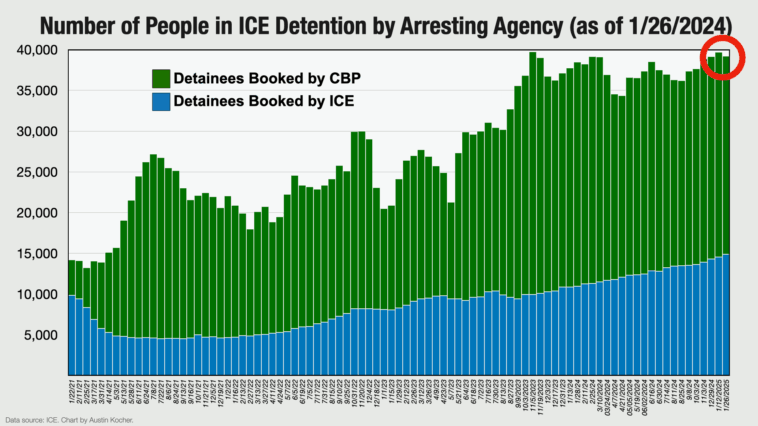
This shift has sparked debates among legal experts, community advocates, and state officials about the real purpose behind aggressive enforcement tactics. The dilemma is further complicated by the fact that the administration has frequently called for far higher arrest numbers—up to 3,000 a day—even though current averages linger around 711 arrests per day in recent months.
Political Rhetoric Versus Enforcement Outcomes
A significant point of contention lies in the disconnect between the administration’s aggressive rhetoric and the actual enforcement results. Trump officials have consistently accused Democrats of sheltering violent criminals and drug traffickers, yet the data indicates that ICE’s broad enforcement strategy has led to a higher proportion of non-criminal infractions being recorded.
The political narrative often paints the picture of immigration enforcement as a strict measure designed to protect American communities from dangerous elements. However, a deeper look reveals a more complicated scenario where:
- An increased focus on minor infractions has inflated overall arrest numbers.
- Enforcement strategies appear to have been pushed towards rapidly increasing detention figures.
- Attention to due process, especially in the immigration court system, is being questioned by legal professionals.
This situation illustrates the nerve-racking challenge faced by policymakers: how to balance the goal of eliminating dangerous elements from communities with ensuring that the enforcement process does not trample on due process rights. As enforcement numbers rise by sweeping up individuals with minor infractions, the public and legal experts alike must question whether higher arrest counts truly equate to safer communities.
Traffic Offenses and Border Infractions: A Closer Look
A surprising element in the arrest data is the prominence of minor traffic offenses among the top charges recorded. Past enforcement activities concentrated on violent and drug-related convictions now bow to an increasing focus on traffic violations and illegal border crossings. For instance, driving while intoxicated remains the most commonly recorded offense, but general traffic violations have now surged into second place, overtaking crimes such as assault and drug trafficking.
This trend is indicative of a broader change in ICE’s tactics. With more individuals being arrested for what many consider to be non-violent, routine infractions, the goal appears to be maximizing arrest numbers rather than focusing squarely on threat elimination.
To better understand the impact of these policies, consider the following table that summarizes the changes between the Trump and Biden administrations:
| Category | Biden Administration (%) | Trump Administration (%) |
|---|---|---|
| Overall Arrests with Convictions | 53% | 40% |
| Violent Crime Convictions | 10% | 7% |
| Drug Crime Convictions | 9% | 5% |
| Non-Convicted Individuals | 47% | 60% |
The table clearly shows that the Trump administration’s enforcement approach has significantly increased the proportion of non-convicted arrests, raising pointed questions about the underlying strategies and their practical implications.
Legal Perspectives and Arrest Tactics: Due Process Under Pressure
Legal professionals across the nation have raised concerns about ICE’s methods, noting that many arrests seem to prioritize hitting higher numbers over ensuring fairness and thorough judicial review. Attorneys have observed that there is a growing tendency to detain individuals for nearly any type of violation or pending charge—even those that may not have a direct impact on public safety.
Vanessa Dojaquez-Torres, practice and policy counsel for the American Immigration Lawyers Association, remarked on the latest trends: “We’re not completely sure what the reasoning or the goal is behind some of these policies, other than they want detention numbers up.” Her comments underscore a broader anxiety that the rise in arrests could be more about fulfilling political promises for mass deportations than about genuine public safety concerns.
This shift in enforcement tactics has profound implications for due process. When government lawyers request bail revocations and push for immediate arrests even for non-violent charges, the risk of undermining the careful, considered work of the immigration court process increases. The result is a system that many fear might be straying from its duty to ensure fair legal procedures.
Key points that legal experts highlight include:
- The potential circumvention of judicial review by accelerating detention without a thorough examination of each case.
- The irony that the enforcement measures target individuals for offenses that, while technically illegal, do not necessarily threaten public safety.
- The worry that such practices could lead to a slippery slope, where basic traffic violations become a pretext for detention and subsequent legal complications.
In a system that is already loaded with issues regarding fairness and transparency, these enforcement choices add another layer of problematic tension. For those who must “figure a path” through the immigration court process, the rising rate of minor offense arrests presents a serious challenge.
Local and State-Level Reactions to Escalated Enforcement
Interestingly, the response to these aggressive enforcement measures has not been uniformly supportive. In several states, local officials and lawmakers have begun to question the focus on non-criminal arrests and the real-world consequences of such a tactic. For example, in Oregon, the number of arrests soared from 51 under the Biden administration to 227 under Trump, yet the proportion of individuals with violent convictions remained low.
Local state representatives, including moderate Republicans, have voiced concerns about the potential civil rights implications of arresting individuals for minor or technical violations. Oregon state Representative Cyrus Javadi noted that “the majority of recent ICE detentions involve people with no convictions. That’s a pattern I find troubling, especially when it risks sweeping up people for things like expired tags or missed court dates.”
This sentiment resonates across various communities, prompting discussions about the necessity for reforms in the way traffic stops and immigration enforcement are handled at the local level. The Vera Institute of Justice, for instance, has been a strong advocate for recalibrating policies to limit traffic stops strictly to safety issues rather than minor administrative violations.
Local and state-level review of ICE enforcement policies tends to focus on:
- Reviewing the statistical basis for high arrest numbers when many detentions involve minor infractions.
- Calling for policy revisions that prioritize public safety over meeting arrest quotas.
- Debating the role of local law enforcement in supporting or curtailing federal immigration actions.
These conversations represent a critical juncture in assessing whether stringent immigration enforcement can coexist with the principles of fairness and justice embedded in due process.
Impact on Immigrant Communities: Consequences of Sweeping Enforcement
Beyond the statistics and policy debates lies the human story: the effect on immigrant families and communities caught up in an extensive enforcement campaign. Sweeping up individuals for what are often minor or technical violations carries numerous consequences – both social and economic. Families may find themselves torn apart while individuals who pose no threat to society can face nerve-racking legal battles, intimidating detention conditions, and the stigma associated with arrest records.
The immediate impact is not limited to extra detention facilities or extended court dates. In many communities, the added stress of potential legal challenges interferes with daily life, employment, and educational pursuits. When we take a closer look at the issue, the following repercussions are noted:
- Social Disruption: A significant percentage of those arrested turn out to be non-violent offenders, often resulting in family separations and community anxiety.
- Economic Hardship: The legal costs related to prolonged detention and court hearings add a burden to families already facing financial challenges.
- Psychological Impact: The dread and uncertainty of facing detention for relatively minor infractions can create lasting trauma.
The scenario paints a broader picture of an enforcement regime that might be overlooking the long-term well-being of communities while chasing short-term numerical goals. For many immigrants, each arrest is not just a statistic—it represents a personal story that often ends with disruptions that can take years to mend.
Examining the Role of Political Promises and Public Opinion
The drive behind the heightened enforcement has deep roots in political promises made during election campaigns. President Trump’s commitment to “mass deportations” is one such promise. However, a pragmatic analysis of the arrest data indicates that chasing high numbers has led to results that are more indicative of sweeping up everyone—even those with no criminal history—rather than focusing solely on truly dangerous individuals.
This divergence between campaign rhetoric and on-the-ground enforcement underscores several important points that are worth pondering:
- Political Leverage: The administration has repeatedly set arrest targets (as high as 3,000 a day) to prove that the government is taking a tough stance on immigration. Yet, the reality points to much lower averages.
- Public Perception: When the public hears that “dangerous criminals” are behind bars, the assumption is that safety is being bolstered. Unfortunately, the increasing share of non-criminal arrests undermines that narrative.
- Policy Trade-Offs: By increasing the total number of arrests with minor charges, the focus may inadvertently shift away from addressing the root causes of serious immigration-related crimes.
In balancing the political agenda with practical results, many experts argue that a recalibration of strategy is in order. Instead of racing to inflate arrest statistics, it might be more effective to concentrate on measures that directly reduce unlawful activities while protecting basic civil rights.
Challenges in Reporting and Data Collection
One cannot discuss these issues without acknowledging the tricky parts involved in collecting and interpreting arrest data. The Deportation Data Project—a collaborative effort led by attorneys and academic institutions across California, Maryland, and New York—has been essential in providing clarity by gathering anonymized public datasets obtained through Freedom of Information Act requests.
Even so, several complicated pieces remain when trying to synthesize the data:
- Data Variability: Different states and local jurisdictions have varying methods of recording and reporting crimes.
- Enforcement Timing: The pace of policy implementation can lead to data that reflects short-term trends rather than long-term strategies.
- Qualitative Context: Numbers alone cannot capture the full story behind each arrest, such as community impacts or procedural challenges.
This mosaic of information requires journalists and experts to poke around and get into the little details, ensuring that their reports do not inadvertently reinforce misleading narratives. When one is faced with a dataset that is already riddled with tension over its interpretations, the responsibility lies on both reporters and policymakers to clarify what the numbers truly represent.
Interpreting the Impact on the U.S.-Mexico Border Enforcement
The data and ensuing discussions also underscore the complicated pieces that characterize immigration enforcement along the U.S.-Mexico border. Officials on both sides of the political spectrum have been closely monitoring arrest figures, especially since the Trump administration’s policies have been closely tied to the enforcement on the border.
For many, the border region is another battleground where enforcement policies are tested. The numbers indicate that while arrests for immigrants with violent or drug-related convictions have increased in absolute terms, the dramatic rise has been in arrests involving non-criminal activities. This trend is particularly evident when analyzing border crossing infractions, which now include a higher share of individuals arrested for illegal entry rather than for more severe crimes.
Key observations related to border enforcement include:
- Increased Sweeping Tactics: ICE reports that the acceleration of arrests began mid-May, coinciding with policies designed to revoke bail and arrest individuals after court appearances. This move has been interpreted as an effort to boost detention numbers rapidly.
- Rising Minor Infractions: The emphasis on speeding up case processing for immigrants with minor violations has led to concerns that the process lacks the careful checks typical of a judicial system.
- Border Security Versus Human Rights: While the stated aim is to secure borders and protect public safety, critics argue that an overzealous approach risks infringing on the rights of individuals who may not even pose any significant threat.
These observations call for a balanced discussion on border security that weighs public safety concerns against protecting the rights and dignity of those caught in enforcement operations. As policies continue to evolve, so too must the strategies that define what effective and just border enforcement looks like.
Policy Reforms: Finding the Right Path Forward
The growing dissonance between political promises and enforcement outcomes highlights a critical need for policy reforms in the field of immigration enforcement. With data clearly showing that a mere escalation in arrest numbers does not equate to improved public safety, it becomes essential to contemplate a future strategy that balances effective criminal targeting with fair treatment under the law.
Policy reforms might address several of the following issues:
- Targeted Enforcement: Focusing efforts on genuine threats rather than minor infractions could help preserve judicial resources and community trust.
- Due Process Innovations: Improving procedures within the immigration court process to protect individual rights, even while expediting case handling.
- Local Collaboration: Working closely with state and local law enforcement to ensure that federal actions complement rather than conflict with community needs.
- Transparency Initiatives: Enhancing data collection and reporting practices, so that the public and policymakers can better understand the outcomes of enforcement measures.
Some cities and states have already taken steps in this direction. For instance, initiatives that limit traffic stops to genuine safety issues have been implemented in 10 states and in several major cities. Such measures not only reduce unnecessary stops but may also diminish the chances for indiscriminate arrests by ICE.
In exploring possible reforms, it may be beneficial to consider these recommendations in a tabulated format:
| Reform Area | Proposed Measures | Potential Benefits |
|---|---|---|
| Targeted Enforcement |
|
|
| Due Process Enhancements |
|
|
| Local Collaboration |
|
|
| Transparency Initiatives |
|
|
Broader Implications and the Future of Immigration Enforcement
In debating the effectiveness of current immigration enforcement practices, it becomes apparent that the impact of these policies stretches far beyond arrest statistics. The long-term effects on legal procedures, community trust, and public perceptions of fairness are all at stake. The situation is complicated by a myriad of challenging factors including rapidly evolving border security needs, media framing, and political partisanship.
One cannot ignore the broader societal implications:
- Community Impact: When enforcement measures sweep up individuals for minor infractions, communities may come to feel that they are being unfairly targeted. This could lead to a decline in cooperation with law enforcement and a rise in public disenchantment.
- Judicial Overload: An influx of cases related to minor infractions can bog down the immigration court system, delaying justice for more serious offenses.
- Political Polarization: Disparate enforcement practices further entrench divisive political narratives, making it more challenging to reach bipartisan compromises on immigration reform.
Looking into the future, it is clear that any meaningful conversation about immigration policy must involve a rethinking of current enforcement strategies. Instead of relying solely on arrest numbers as a measure of success, policymakers would do well to focus on quality—ensuring that the individuals who truly pose a threat are addressed, while those with minor violations receive fair treatment and due process.
A Call for Balanced Approach and Community-Centric Reforms
The data and narratives emerging from the current enforcement trends paint a picture of a system at a crossroads. On one side lies the pursuit of ever-higher arrest statistics, often achieved at the expense of fair treatment and community stability. On the other side is the call for a balanced strategy—one that upholds public safety without sacrificing constitutional rights or alienating marginalized communities.
Communities and lawmakers alike are urging government agencies to find their way through these subtle details of enforcement and to give priority to policies that are both effective and equitable. Some of the key recommendations include:
- Reassessing Arrest Metrics: Instead of focusing solely on arrest numbers, consider metrics that factor in the safety impact and fairness of the process.
- Emphasizing Transparency: Increase public access to enforcement data and ensure independent monitoring of ICE practices to bolster accountability.
- Protecting Vulnerable Populations: Ensure that enforcement does not disproportionately affect immigrant communities, especially those with minor or technical violations.
- Promoting Local Engagement: Work with community leaders and local law enforcement to tailor policies that address the unique needs of each region, from border towns to urban centers.
These proposals are not only key to improving the effectiveness of immigration enforcement but are also essential for restoring faith in the justice system. By managing your way through these challenging issues with a focus on fairness and community well-being, there is hope for an enforcement strategy that truly serves the public good.
Assessing the Impact: A Broader Social and Legal Analysis
As we take a closer look at immigration enforcement, it is important to acknowledge the many layers of this debate. Law enforcement, legal professionals, community advocates, and policymakers must all confront the reality of a system that appears to be shifting its focus from dangerous criminal behavior to a more indiscriminate approach. This trend carries a number of subtle details that can have a lasting impact on society:
- Public Safety Versus Procedural Justice: While aggressive enforcement may create the perception of enhanced safety, it raises complicated questions about the proper balance between public security and individual rights.
- Trust in Government Institutions: As enforcement policies become more loaded with issues, public trust in the institutions responsible for upholding the law may wane, especially if the policies appear to sacrifice fairness for the sake of impressive statistics.
- Long-Term Legal Consequences: Policies that circumvent standard legal processes risk establishing dangerous precedents, which could have lasting consequences for both immigration law and broader judicial practices in the future.
This multifaceted debate requires a nuanced approach that digests the fine points of both enforcement and societal impact. In doing so, stakeholders may better appreciate the nerve-wracking challenges ahead and work together to implement policies that strike a more equitable balance between security and justice.
Concluding Thoughts: A Neutral Perspective on Enforcement Strategies
The analysis of ICE arrest data under the Trump administration, when viewed in juxtaposition with Biden-era statistics, invites more questions than it answers. What is clear is that the enforcement strategy has shifted toward increasing detention numbers by arresting a higher proportion of individuals with minor infractions, rather than focusing solely on those with serious criminal convictions.
While political rhetoric continues to emphasize the need to target dangerous criminals—child pedophiles, drug traffickers, burglars—the reality on the ground is much more complicated. Legal professionals, community advocates, and some local politicians are increasingly alarmed by the rising number of arrests for transportation violations and low-level immigration breaches. The broader picture is one of enforcement that is entangled with political promises, data challenges, and pressing questions about due process.
It is essential for the future of immigration enforcement that policymakers and law enforcement agencies take a step back and reexamine their priorities. By adjusting their focus to genuinely dangerous criminal behavior and ensuring robust due process safeguards, a more effective and just approach to immigration enforcement may be realized. In doing so, governments can work toward a system where public safety, legal fairness, and community trust are all treated as super important elements of the overall strategy.
In conclusion, while statistics might indicate that fewer than half of ICE arrests under Trump were of convicted criminals, the broader narrative exposes several nerve-wracking issues. The tactics, driven by a desire to meet record arrest numbers, have led to sweeping up many individuals who have committed only minor infractions. As communities and government agencies grapple with these challenging bits of evidence, the call for balanced, transparent, and community-focused enforcement strategies grows ever louder.
As immigrants, communities, and legal experts look to the future, addressing these tangled issues means not only rethinking enforcement tactics but also revisiting the very metrics used to assess policy success. With more thoughtful policies and genuine collaboration across different levels of government, it is possible to forge a path that both secures borders and protects the rights and dignity of all individuals affected by these policies.
This editorial is not an endorsement of any one political viewpoint. Rather, it serves as a call to examine the little details, the subtle parts, and the real-world consequences of immigration enforcement practices that have far-reaching implications for our society. By keeping the conversation neutral and fact-based, we can better understand the twists and turns of this contentious policy area and work together toward a system that is both effective and equitable.
Ultimately, finding your way through these complicated pieces will require persistence, transparency, and a commitment to justice. As policymakers, law enforcement officials, and community leaders take the wheel and work through the tough problems, the future of immigration enforcement hangs in a delicate balance—one that demands careful thought and a willingness to adjust course when necessary.
Only by embracing an honest dialogue about these thorny issues can we hope to steer through the traps set by politically motivated metrics and build a system that truly serves the best interests of public safety and human dignity.
Originally Post From https://www.tucsonsentinel.com/nationworld/report/072425_ice_arrests/fewer-than-half-ice-arrests-under-trump-are-convicted-criminals/
Read more about this topic at
How does having an arrest with no conviction on your …
Arrest vs. Conviction in Texas